In Arabic, al-Maghrib means the place where the sun sets: the West. For the Arab world, the Maghreb is the western wing, facing Europe across the Mediterranean and the Americas across the Atlantic. In GlobeQuizz the Maghreb filter covers five countries, the members of the Arab Maghreb Union founded in Marrakesh in 1989: Morocco, Algeria, Tunisia, Libya and Mauritania.
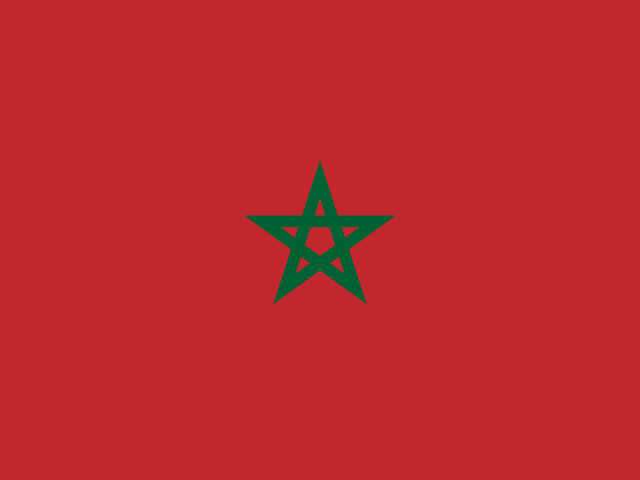 Morocco
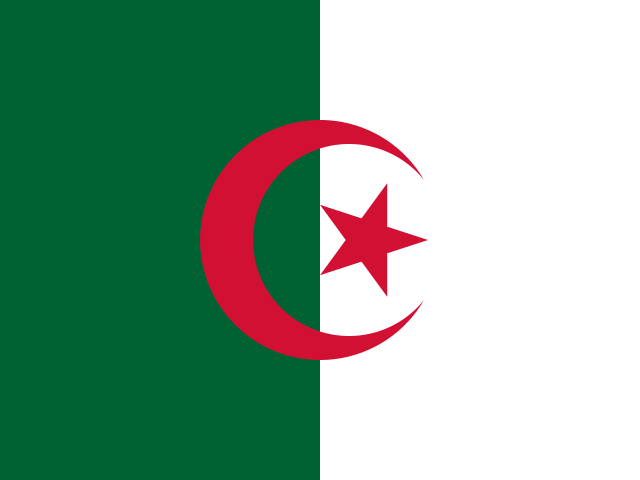 Algeria
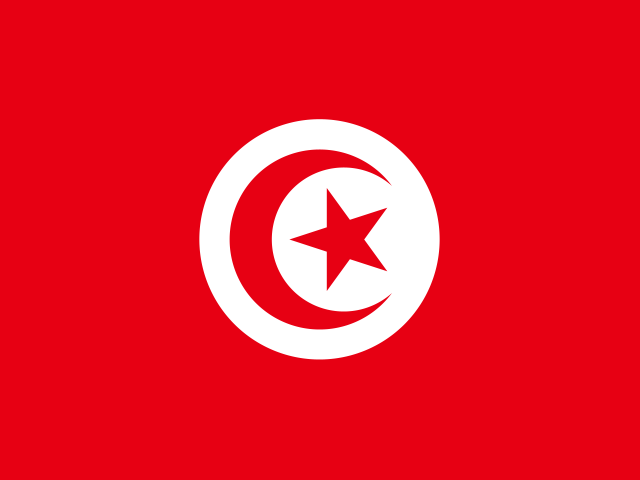 Tunisia
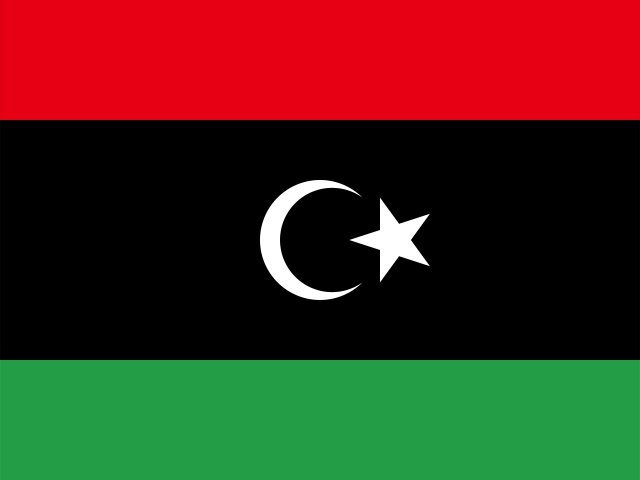 Libya
Libya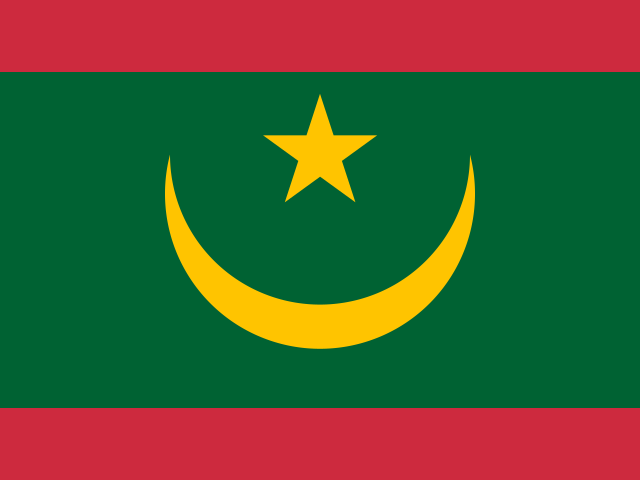 Mauritania
Mountains, desert and two seas
The backbone of the Maghreb is the Atlas, a chain of mountains running about 2,500 km from southern Morocco through Algeria to Tunisia. Its highest peak, Jbel Toubkal in Morocco, reaches 4,167 metres, the highest point in North Africa. The mountains catch rain from the Atlantic and the Mediterranean, which is why the coastal plains are green and most people live there.
South of the Atlas begins the Sahara. It covers most of Algeria, the largest country in Africa, nearly all of Libya, and most of Mauritania. In southern Tunisia, the salt flat of Chott el Djerid shimmers with mirages in summer.
The coastlines differ too. Morocco faces both the Atlantic and the Mediterranean, and at the Strait of Gibraltar it is only about 14 km from Spain. Tunisia holds the northernmost point of Africa near Bizerte. Mauritania faces only the Atlantic, Algeria, Tunisia and Libya only the Mediterranean.
Capitals
Each Maghreb capital is on the coast: Rabat on the Atlantic, Algiers, Tunis and Tripoli on the Mediterranean, and Nouakchott, the youngest, on the Atlantic edge of the desert. Two of them share their country's name, Algiers and Tunis, and Rabat is not Morocco's largest city, a trap explained in our guide to capitals that aren't the biggest city.
Languages
Arabic is official in all five countries, and people speak local forms of it, often called Darija, that differ strongly from the Arabic of the Gulf or Egypt. Mauritania speaks Hassaniya, a dialect with deep Bedouin roots, and also recognises Pulaar, Soninke and Wolof as national languages.
The Amazigh languages, also called Berber, were spoken across North Africa long before Arabic arrived, and millions still speak them. Tamazight became an official language in Morocco in 2011 and in Algeria in 2016, and it has its own alphabet, Tifinagh, which you can see on public buildings in Morocco. French remains widely used in business, science and higher education in Morocco, Algeria and Tunisia, though it is not an official language there.
Where the names come from
Morocco. The English name comes from the city of Marrakesh, through the Portuguese Marrocos. In Arabic the country is simply al-Maghrib, the West, the same word as the whole region.
Algeria. Al-Jazā'ir means the islands, after the small islets that once sheltered the harbour of the capital. The city gave its name to the country, and both are still called al-Jazā'ir in Arabic.
Tunisia. Named after its capital, Tunis, an ancient town on the same gulf as Carthage, which it long outlived.
Libya. One of the oldest country names in the world. Ancient Egyptians wrote of the Libu, a people living to their west, and the Greeks used Libya for all of Africa west of Egypt.
Mauritania. Taken from Mauretania, the ancient kingdom of the Mauri, the people Europeans later called Moors. Curiously, that ancient kingdom lay mostly in what is now northern Morocco and western Algeria, not in modern Mauritania.
Currencies at a glance
The Maghreb has three currency names for five countries: the dinar in Algeria, Tunisia and Libya, the dirham in Morocco, and the ouguiya in Mauritania. The ouguiya is one of only two currencies in the world not divided into tenths or hundredths: one ouguiya is five khoums. Read more in our guide to the dinar, the riyal and the pound.
Play the Maghreb
Open the Maghreb quiz for ten mixed rounds of flags, capitals, languages, currencies and outlines from these five countries, or browse the Maghreb region page. Because the region is small, countries come back more than once in a game, never twice in a row, so you will soon know each of them by shape, flag and name.