Ask someone in the Gulf what a riyal is and the answer depends on where they stand: Saudi, Qatari, Omani or Yemeni. The same goes for the dinar, which is used by seven Arab countries, and the pound, which travels under two different Arabic names. Currency names in the Arab world repeat because they share a long history, much older than the countries that use them today. Once you know that history, the Currencies quiz becomes a lot less confusing.
The dinar: a Roman coin with an Islamic makeover
The word dinar comes from the denarius, a silver coin of ancient Rome, which reached Arabic through Greek. In the 690s the Umayyad caliph Abd al-Malik ibn Marwan minted gold dinars carrying only Arabic inscriptions, a landmark in the history of Islamic coinage. For centuries the dinar meant gold and the dirham meant silver.
Today the dinar is the currency of Algeria, Bahrain, Iraq, Jordan, Kuwait, Libya and Tunisia, and outside the Arab world of Serbia, while North Macedonia's denar has the same origin. The Kuwaiti dinar is often cited as the most valuable currency unit in the world, with the Bahraini dinar close behind. Many dinars are divided into 1,000 smaller units: fils in Kuwait, Bahrain, Iraq and Jordan, millimes in Tunisia, dirhams in Libya.
The dirham: the Greek drachma
Dirham comes from the Greek drachma. It survives as the currency of Morocco and the United Arab Emirates, and as a smaller unit elsewhere: the Qatari riyal is divided into 100 dirhams, and the Libyan dinar into 1,000. Armenia's dram shares the same root.
The riyal and the rial: a Spanish king's coin
The riyal has the most surprising origin. It comes from the Spanish real, meaning royal: the silver coin of the Spanish empire, whose large "piece of eight" circulated across the Indian Ocean and the Gulf for centuries. Merchants in Arabia called it a riyal, and the name stuck.
Today Saudi Arabia and Qatar use the riyal, while Oman, Yemen and Iran use the rial. In English the spelling differs; in Arabic all of them are written the same way. Even Brazil's currency, the real, is a distant cousin, which is why Arabic calls it the Brazilian riyal. The Saudi riyal is divided into 100 halalas, the Omani rial into 1,000 baisa.
The pound: junayh or līra?
The pound is a measure of weight before it is a coin: Latin libra, which gave the Italian and Turkish lira and the British pound. Here Arabic splits in two.
In Egypt and Sudan the pound is the junayh, from the English guinea, a British gold coin of the 1600s. In Lebanon and Syria it is the līra, from the Ottoman and Italian lira. So when you see the word pound in English, think about which Arabic name the country uses: the Nile valley says junayh, the Levant says līra. Britain's own currency is called the junayh istirlīnī in Arabic.
How the Currencies quiz shows them
If the quiz showed "Moroccan dirham", the question would answer itself. So GlobeQuizz shows each currency's name without its nationality, followed by its symbol, and never two options with the same name. Your clue is the symbol, and most Arab currency symbols are made of the initials of the currency and the country:
- ر.س is the Saudi riyal, ر.ق the Qatari riyal, ر.ع. the Omani rial.
- د.ك is the Kuwaiti dinar, د.ب the Bahraini, د.ج the Algerian, د.ت the Tunisian and د.ا the Jordanian.
- ع.د is the Iraqi dinar and ل.د the Libyan.
- د.م. is the Moroccan dirham and د.إ the UAE dirham.
- ل.ل is the Lebanese pound and ج.س. the Sudanese pound.
Read the second letter: it is usually the first letter of the country's Arabic name. Iraq and Libya simply put the country first. Saudi Arabia is al-Saʿūdiyya, Qatar is Qaṭar, Kuwait is al-Kuwayt. With that one habit, a row of identical riyals becomes four different countries.
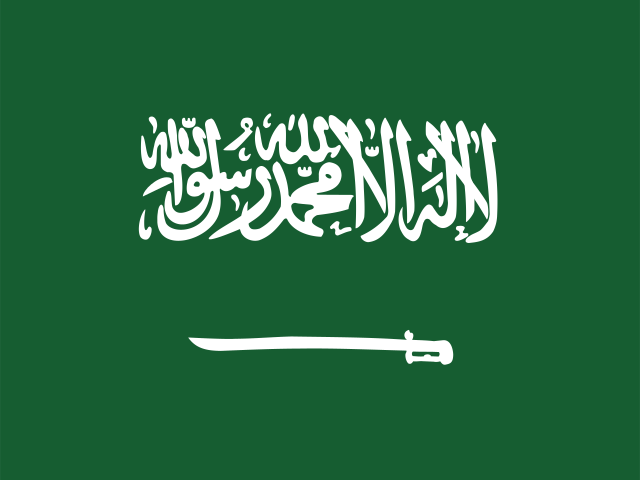 Saudi Arabia
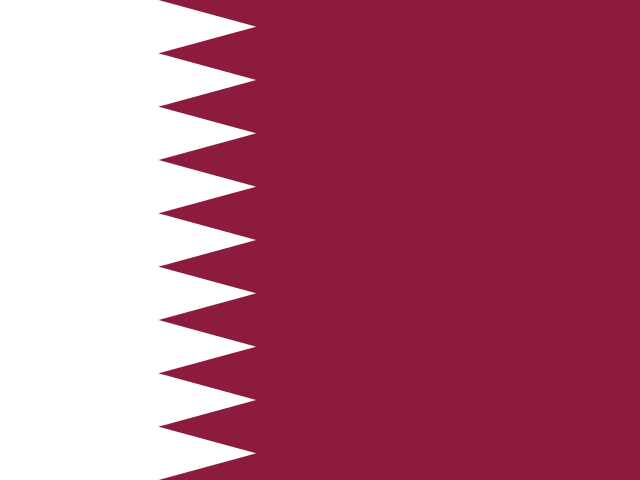 Qatar
Qatar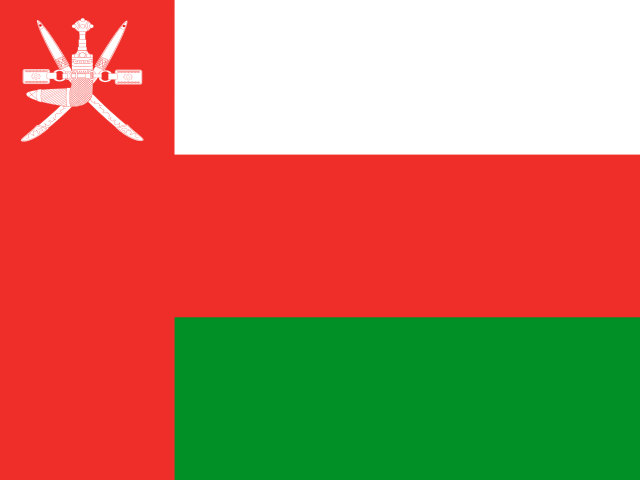 Oman
Oman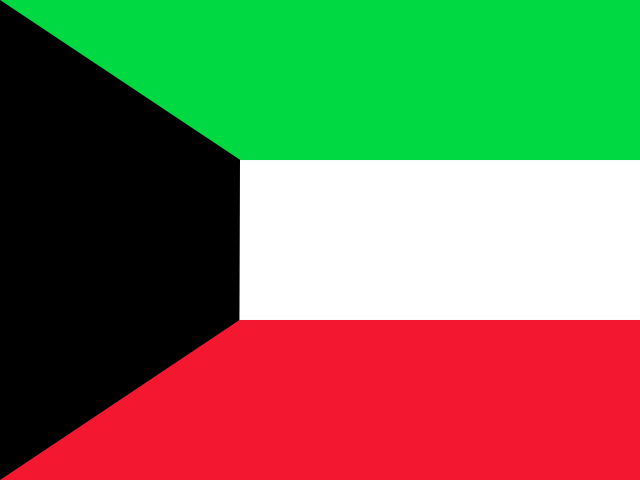 Kuwait
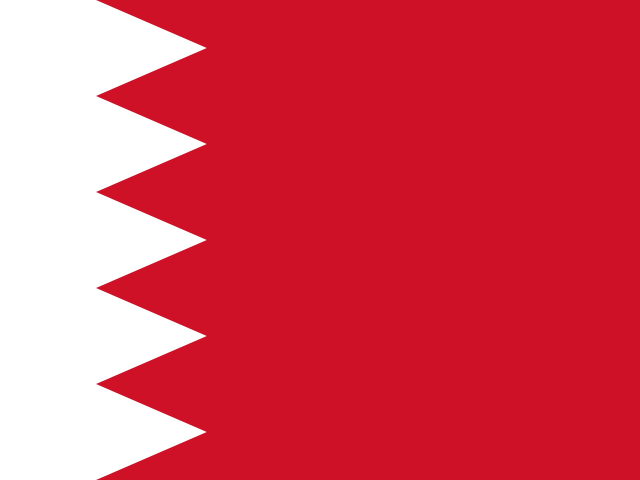 Bahrain
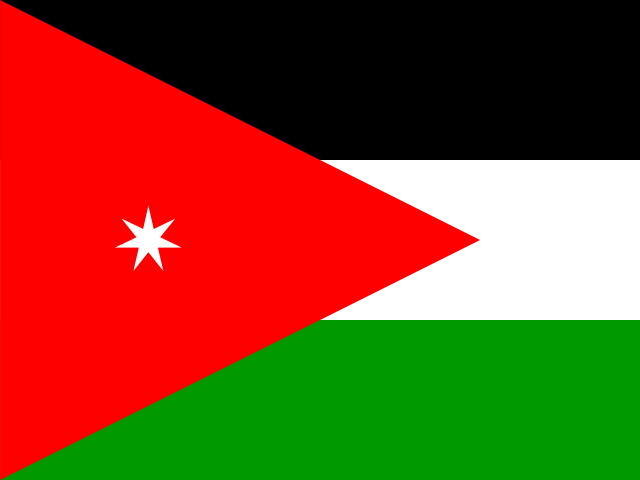 Jordan
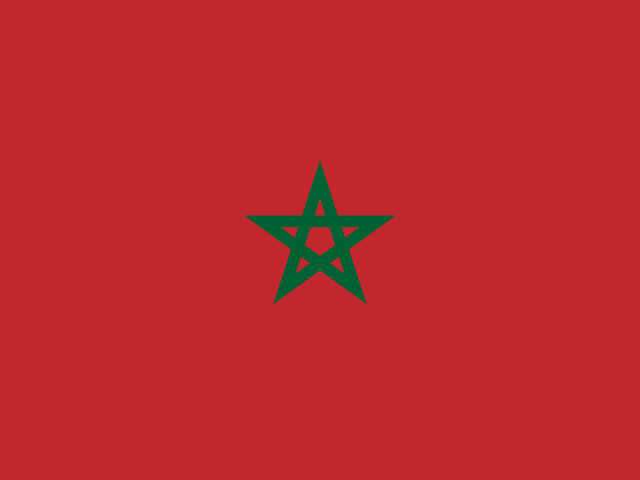 Morocco
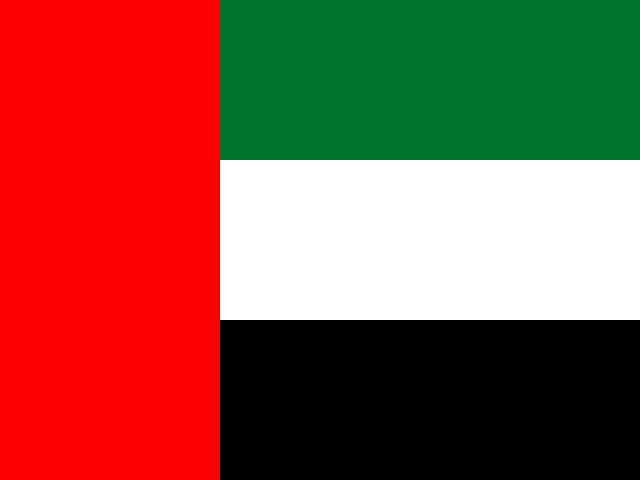 United Arab Emirates
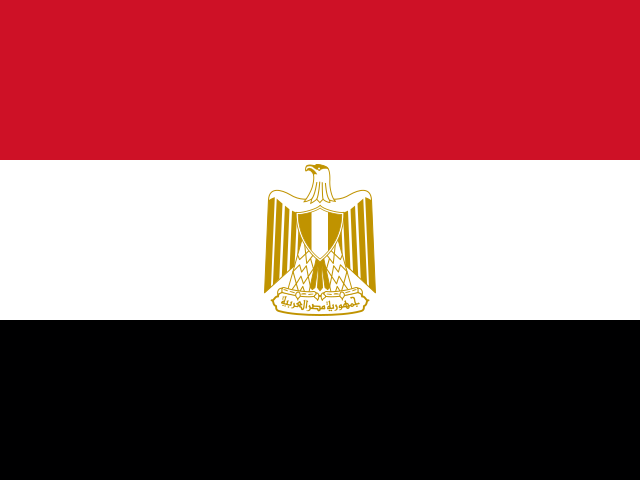 Egypt
Egypt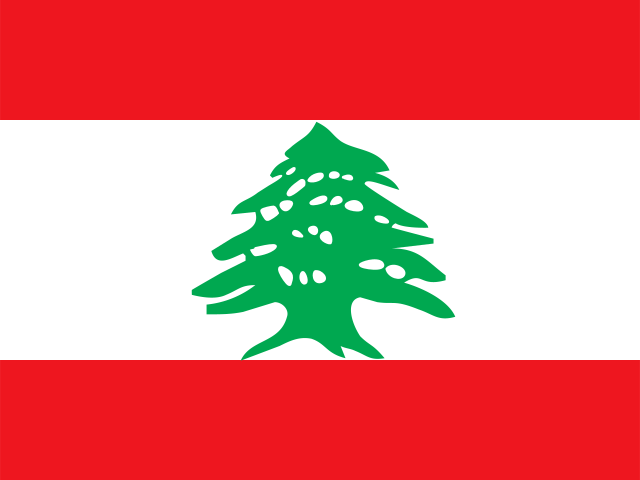 Lebanon
Three quick memory tricks
- Silver and gold. In early Islamic coinage the dinar was gold and the dirham silver; today the dinar countries include the Gulf's most valuable currencies.
- Spain in the Gulf. Riyal sounds like royal for a reason: it was the Spanish king's coin.
- The Nile says junayh. Egypt and Sudan use junayh; Lebanon and Syria use līra.
Play it
Try the Currencies quiz on the Arab World region, where all of these appear together. When a currency is shown on its own as a banknote, it belongs to a single country, so the symbol is all you need. Our guide to currencies shared by several countries covers the euro, the CFA franc and the dollar.