Most countries have a currency of their own, a symbol of independence printed on every banknote. But a surprising number share one. Sometimes it is a choice made between equals, like the euro; sometimes it is a legacy of empire, like the CFA franc; sometimes a small state simply borrows a bigger neighbour's money. Knowing these families saves you a lot of points in the Currencies quiz.
The euro: the biggest club
The euro was launched in 1999 for banks and in 2002 as notes and coins. Twenty-one of the European Union's 27 members now use it, Bulgaria being the newest, since January 2026. Members include Germany, France, Spain, Italy, the Netherlands, Greece and the three Baltic states.
Some countries use the euro without being in the European Union. Monaco, San Marino and Vatican City have agreements with the EU that let them use it and even mint their own euro coins, which collectors love. Andorra has a similar agreement. Montenegro adopted it on its own, without an agreement, after using the German mark. So a euro question can point to almost thirty places, which is why the quiz never shows a euro banknote and asks you to name the country.
The CFA franc: two currencies with one name
In West and Central Africa, fourteen countries use a franc called CFA, but there are actually two separate currencies.
The West African CFA franc is used by eight countries: Benin, Burkina Faso, Côte d'Ivoire, Guinea-Bissau, Mali, Niger, Senegal and Togo. The Central African CFA franc is used by six: Cameroon, the Central African Republic, Chad, the Republic of the Congo, Equatorial Guinea and Gabon.
Both were created in 1945 and are pegged to the euro at the same rate: one euro is worth 655.957 CFA francs. Because they are worth the same, many people think they are one currency, but the notes of one zone are not legal tender in the other. Equatorial Guinea is the odd one out: a former Spanish colony that joined the franc zone in 1985. A planned replacement for the West African franc, the eco, has been discussed for years.
A quick memory key: the West African zone runs along the Atlantic and the Sahel, from Senegal to Niger; the Central African zone surrounds the Gulf of Guinea's inner corner, from Cameroon to the Congo.
The East Caribbean dollar
Six island nations in the eastern Caribbean share one dollar, issued by a central bank in Saint Kitts: Antigua and Barbuda, Dominica, Grenada, Saint Kitts and Nevis, Saint Lucia, and Saint Vincent and the Grenadines. Two British territories, Anguilla and Montserrat, use it too. It has been fixed at 2.70 to the US dollar since 1976. Sharing makes sense for small islands: one central bank is cheaper and more trusted than six.
The US dollar away from home
Several countries use the US dollar as their own currency. Ecuador switched in 2000 after a severe crisis, and El Salvador followed in 2001. Panama has used it since 1904 alongside its own balboa, which exists mostly as coins. Timor-Leste uses it too, and so do three Pacific nations with close ties to the United States: the Marshall Islands, Micronesia and Palau.
Borrowing a big neighbour's money
- Australian dollar: used by Kiribati, Nauru and Tuvalu.
- Swiss franc: used by Liechtenstein, which is bound to Switzerland by a customs union.
- South African rand: circulates in Lesotho, Eswatini and Namibia next to their own currencies, which are pegged to it one to one.
- Indian rupee: accepted in Bhutan alongside the ngultrum, which is pegged to it.
How the quiz handles shared currencies
Shared currencies make wonderful questions in one direction and impossible ones in the other. If we show you a country and four currencies, there is exactly one right answer, even if that answer is the euro. But if we showed a euro note and asked for the country, a dozen answers would be correct.
So GlobeQuizz follows a simple rule: shared currencies are only ever asked from country to currency. Currency-to-country questions, shown as a banknote, appear only when a single country in the world uses that name and symbol. The four options in a round always carry four different names, so you will never have to choose between two francs or two dollars.
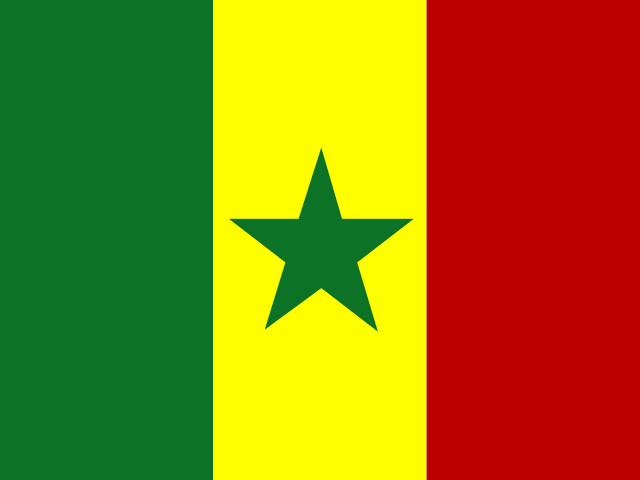 Senegal
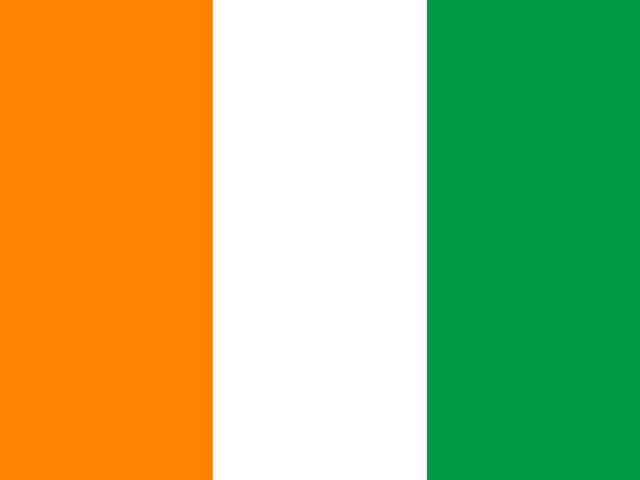 Côte d'Ivoire
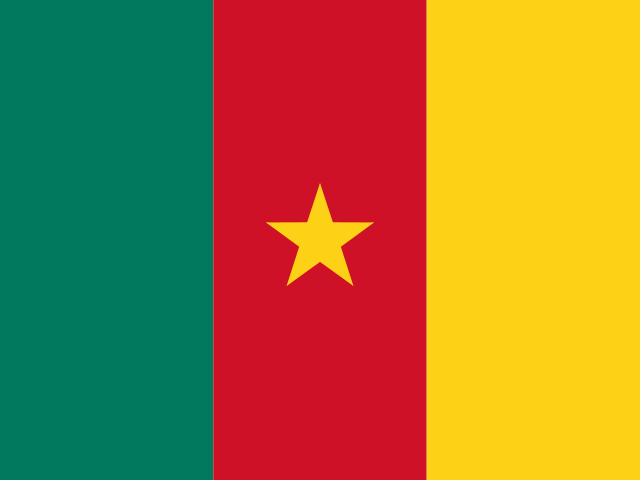 Cameroon
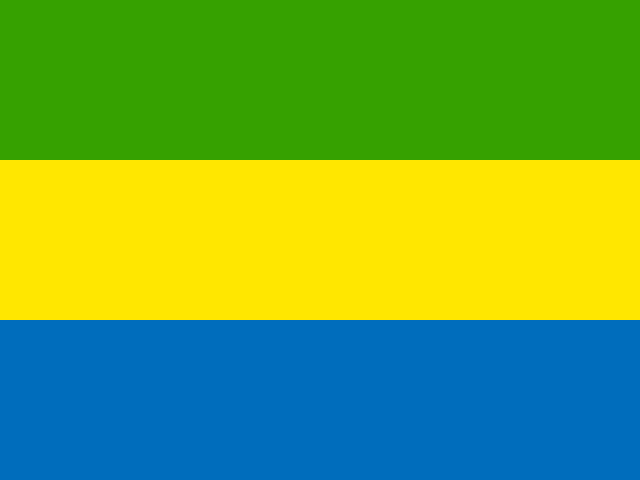 Gabon
Gabon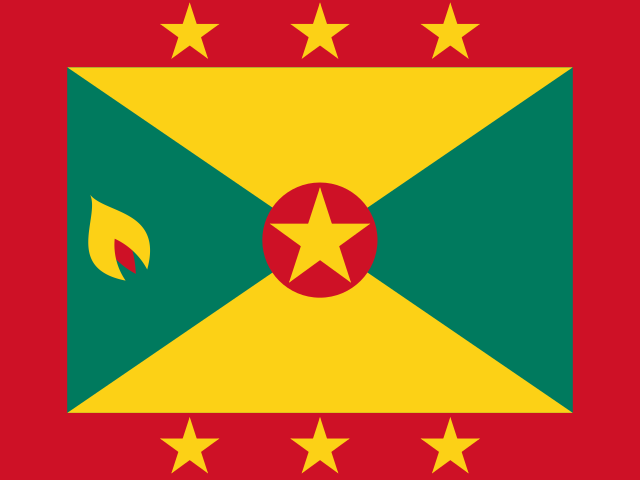 Grenada
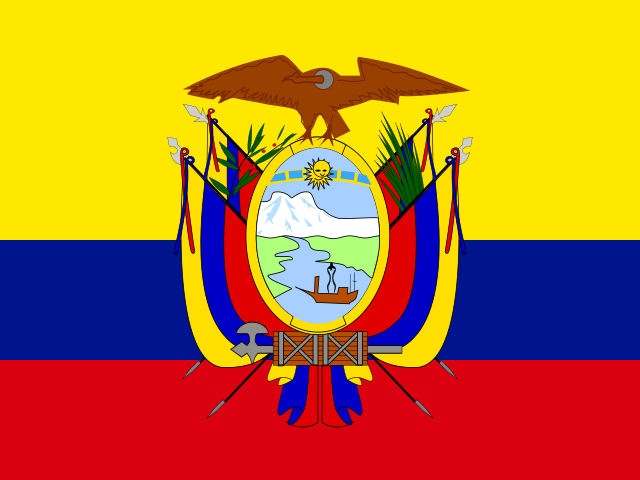 Ecuador
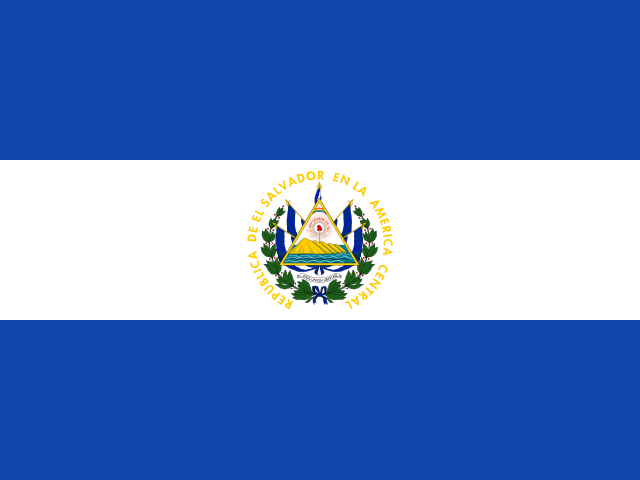 El Salvador
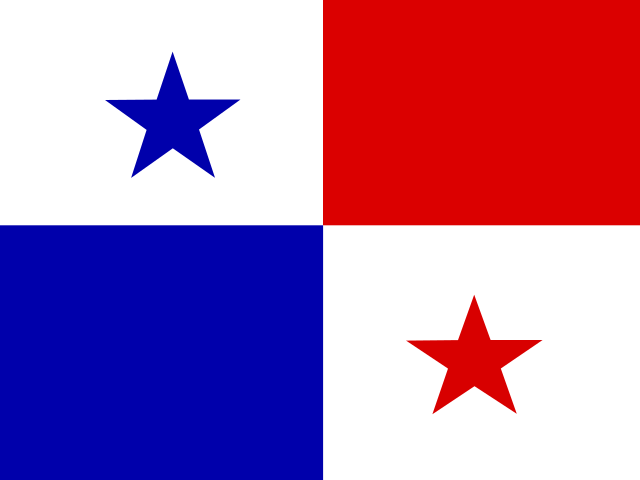 Panama
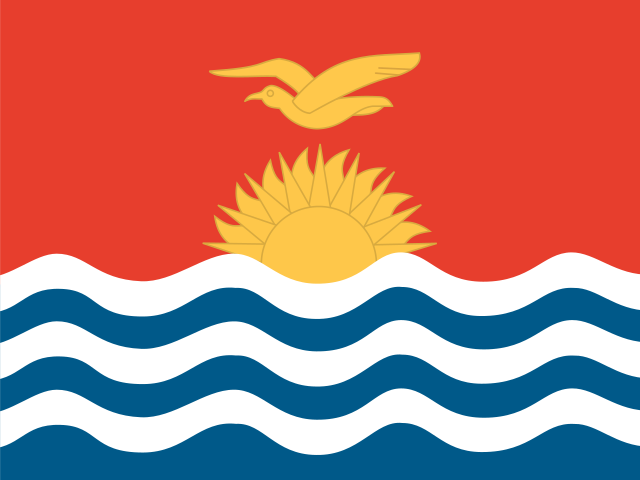 Kiribati
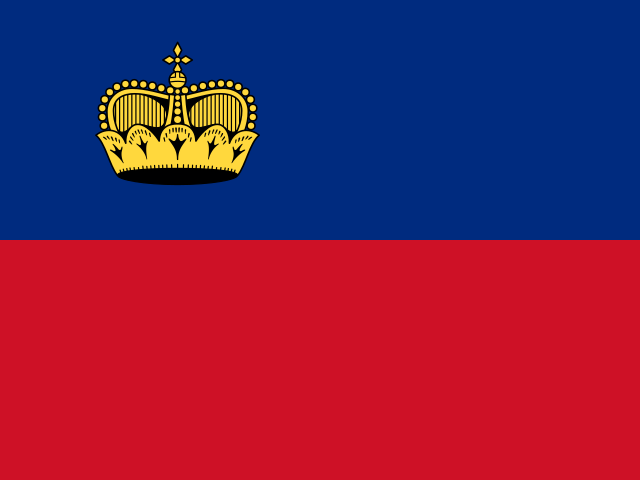 Liechtenstein
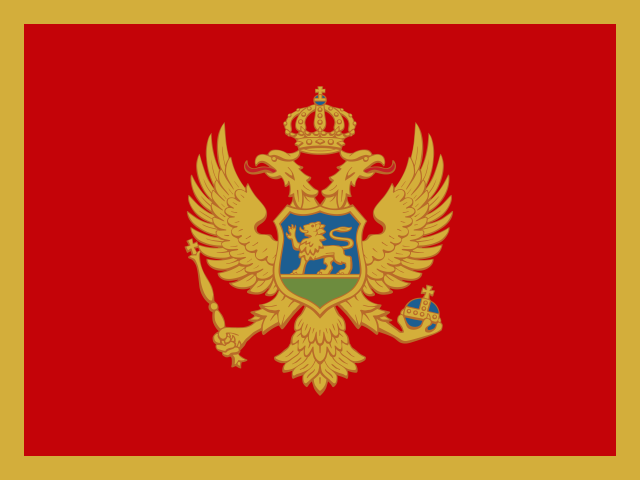 Montenegro
 Monaco
Play it
Try the Currencies quiz and watch for the families above. On Hard difficulty the wrong options come from neighbours, so a West African question may offer the CFA franc next to the Ghanaian cedi and the Nigerian naira. For the Arab world's own currency families, read why so many countries use the dinar, riyal or pound.